

Many people see an Invisalign dentist for crooked teeth, not jaw pain. Yet a misaligned bite can quietly drive the headaches and jaw soreness you have been living with.
There is a genuine and physical connection between bite problems and jaw symptoms, and it is not always clear unless you examine carefully the way your teeth come together. By understanding this relationship you can avoid years of unnecessary discomfort.
This guide examines that connection and what clear aligners can correct, as well as when further treatment comes into play.
Key Takeaways
- The jaw joints absorb extra force when your bite does not line up correctly.
- Clear aligners shift teeth into better positions, which can ease pressure on the jaw.
- A misaligned bite is not the only cause of jaw pain or joint problems.
- Night guards and other therapies often support orthodontic treatment for jaw symptoms.
- Only a clinical evaluation can confirm whether your bite is behind your discomfort.
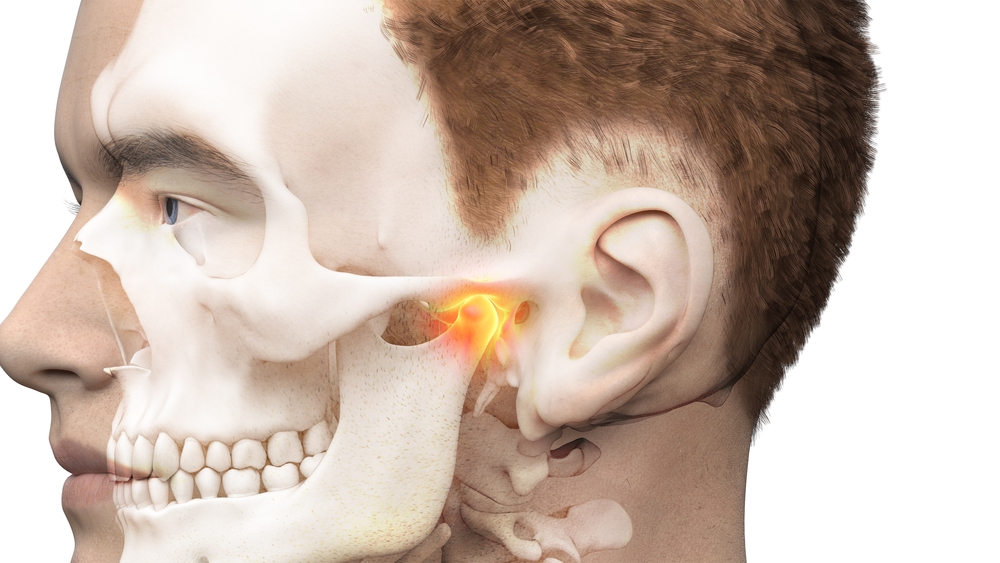
Jaw Pain, Tension Headaches, and the TMJ (Temporomandibular Joint) Connection
Jaw pain usually begins at the temporomandibular joint, or TMJ, since this joint is located just in front of each ear and links the lower jaw to the skull.
What Causes TMJ Disorders
TMJ disorders occur when the joint, the muscles around it, or both are subjected to more stress than they can cope with. According to the National Institute of Dental and Craniofacial Research, the condition involves pain and dysfunction in the jaw joint and the muscles that move it. An uneven bite is a common cause.
People tend not to realize how common these disorders are. The National Institute of Dental and Craniofacial Research states that they affect between 5 percent and 12 percent of the general population at any one time, which is one reason dentists ask detailed questions before suggesting a course of treatment.
How TMJ Strain Leads to Headaches and Facial Pain
That particular strain is, in fact, not usually confined to the jaw. Often, when the jaw muscles are used frequently, people develop tension headaches and facial pain. In some cases, people notice a dull ache near the temples or behind the eyes. Symptoms may also worsen after long periods of talking, for example during work calls or when giving a speech.
Not every case starts with a problem related to tooth position, since joint injury, arthritis, and disc problems can also be involved. In many instances, however, the bite is only a few millimeters off, and that’s exactly what orthodontic treatment can address. The first step toward relief is recognizing this connection.
Joint Noises, Sore Facial Muscles, and Other Symptoms to Know
The clicking or popping you hear when you open your mouth is the most common indication of a joint problem; such noises occur because the cushioning disc inside the joint shifts out of place. They don’t always cause pain, but they do show that the joint isn’t moving properly.
Other signs are easy to overlook:
- Soreness in the jaw muscles, especially in the morning
- Jaw tension that builds throughout the day
- Aching near the ears or cheeks
- An uneven bite or one-sided chewing discomfort
Some patients notice their jaw feels tired by the end of the day. These symptoms can also radiate outward. MedlinePlus notes that pain signals sometimes travel and end up causing a headache, earache, or toothache elsewhere. Tracking when symptoms appear can help your dentist pinpoint the cause faster.
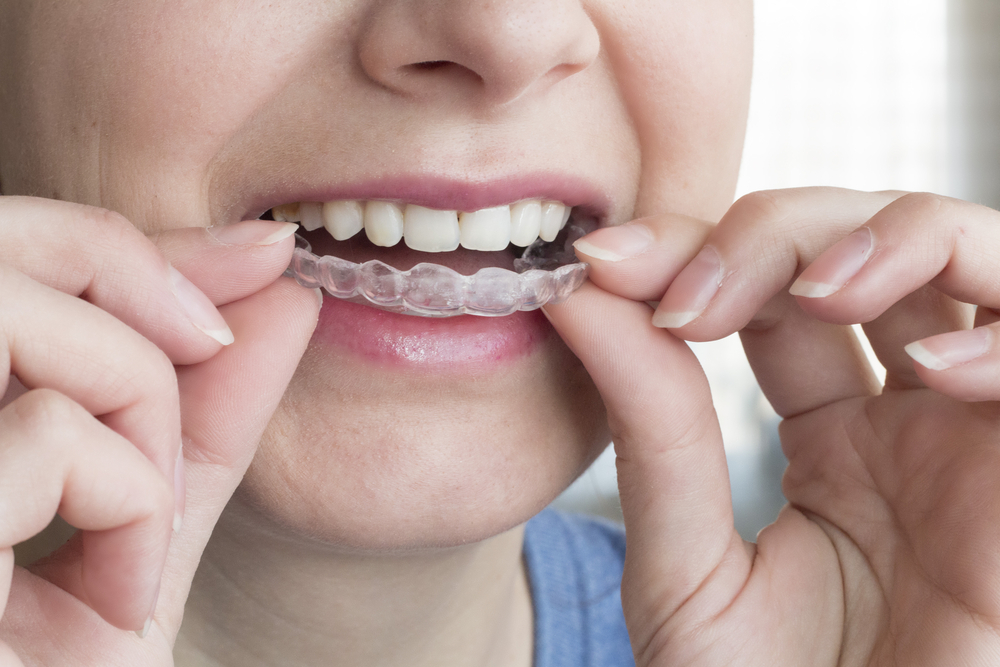
How Bite Misalignments and Clear Aligners Interact
Bites in which the teeth are misaligned affect the way force is transmitted through the mouth; when the bite is incorrect, some teeth have to bear more pressure than they should.
How Clear Aligners Shift Bite Pressure
Uneven pressure not only wears down teeth over time but also stresses the jaw joint and strains the muscles that stabilize it.
Clear aligners function by slowly moving the misaligned teeth into more desirable positions. Each new tray applies a small, controlled amount of force. This gradual movement is one reason aligner treatment lasts months rather than days.
During treatment, the way the teeth fit together changes. As the teeth move into alignment, pressure is distributed more evenly along the dental arch rather than focused on a few areas. Although most patients don’t notice the change week to week, the overall effect matters. Dentists closely monitor this process and adjust it if progress slows.
Aligners vs. Fixed Braces: What’s Different
People who have an open bite are usually the first to notice it. If the front teeth don’t overlap correctly, then the back teeth have to bear an unreasonably heavy load. Fixing this distributes forces across a larger part of the arch. People with crowding or spacing issues also see similar improvements as the aligners move their teeth into position. Because the correction happens gradually, it often causes less discomfort than sudden adjustments.
Aligner treatment also differs from fixed braces in daily use because the trays can be removed, making it easier to brush and floss during treatment. Instead of applying force through brackets and wires, aligners distribute force across the entire tray. Many patients find this more comfortable day to day. For adults worried about how they look during treatment, the slim profile of clear aligners is a practical benefit.
What Aligner Therapy Can and Cannot Fix
Clear aligners can address alignment problems that lead to bite issues, such as crowding, spacing, and an open bite; if these problems cause jaw symptoms, correcting your teeth can greatly reduce strain on your joints and muscles. A dentist is generally able to determine early on which category applies to your case.
Aligner therapy can’t repair structural damage within the joint itself. If jaw pain is due to disc displacement or joint injury, shifting the teeth will not cure it. The same applies to muscle dysfunction, which is not related to tooth position. This early understanding helps in setting realistic expectations for treatment.
A clinical evaluation is the only way to know which factor is driving your symptoms. This distinction matters before starting any treatment plan.

Building a Complete Treatment Plan: Beyond Orthodontic Alignment
When jaw symptoms and bite issues appear together, treatment plans often involve more than one approach. In this context, oral health isn’t just about tooth position. It also includes what your jaw muscles do at night and whether stress is adding to joint strain.
Night Guards and Daytime Habits
For many patients, a night guard is the first addition to the plan. Grinding during sleep puts significant force on the jaw joints and muscles. An occlusal guard worn at night creates a barrier between the upper and lower teeth, reducing that force. As MedlinePlus explains, grinding during sleep is often the bigger concern because it’s harder to control than daytime clenching. Consistency matters here. Wearing a night guard only occasionally rarely produces the same benefit as wearing it every night. Many patients notice less morning soreness within a few weeks of consistent use.
Daytime habits, like clenching during a stressful call, also add to muscle strain. Simple stress management and awareness of your habits can reduce how often this happens. Stress-related clenching can be harder to notice, since it often happens without awareness. Noting when your jaw feels tense during the day can reveal patterns worth mentioning at your next visit.
Additional Therapies for Complex Cases
For symptoms that do not improve with those steps, other options exist:
- Dental splints or bite adjustments
- TENS therapy or MLS laser therapy
- Myofunctional therapy or DTR therapy
- Physical therapy for the jaw muscles
These are not starting points, but they remain available for more complex cases. Not every case needs advanced therapy, but knowing the options exist can ease uncertainty. Sleep apnea can also surface during a dental exam, since it overlaps with jaw structure and nighttime habits.
When bite problems are more severe, dental crowns may restore proper contact by rebuilding tooth structure. In rare cases of structural jaw misalignment, surgery may be an option.
Digital Scanning, Bite Evaluation, and When Other Approaches Are Needed
Bite evaluation today usually starts with 3D scanning instead of traditional impressions. Intraoral scanners map the dental arches by capturing thousands of data points in a single pass. That level of detail gives the dental team a clear picture of your bite and tooth position. It also shows jaw structure before any treatment begins.
Digital scans also confirm bite evaluation findings and flag anything that could affect how treatment should proceed. This step matters most when jaw symptoms are part of the picture. Scans can reveal issues a standard exam might miss. Patients often find the scanning process quicker and more comfortable than older methods.
Bite shape itself can matter too. NIDCR research suggests a smaller lower jawbone may predict a person’s risk of painful jaw problems. When scans reveal problems beyond what aligners can fix, you may need extra appliances or a referral. It also gives both you and your dentist more confidence in the plan.
Your Invisalign Dentist Can Help Answer the Bite Question
Talking to an Invisalign dentist is the clearest way to learn whether your bite is behind your jaw pain. Many cases improve once treatment corrects the misalignment, which reduces the mechanical stress driving the discomfort. Other cases need extra support, like a night guard or additional jaw-focused therapy.
What works best depends entirely on what is causing your symptoms. A blog post can’t determine that. Waiting rarely makes bite-related discomfort disappear on its own. Bringing up your symptoms during a routine visit costs nothing and often clarifies a lot. Most patients feel relieved just having a clear answer.
If you have been wondering whether your bite is connected to your discomfort, the next step is simple: schedule an Invisalign consultation with Cherry Chase Dental today!
FAQs
How does Invisalign work to relieve jaw pain?
Invisalign can relieve jaw pain caused by bite misalignments that put uneven pressure on the jaw joints and muscles. Correcting tooth position changes where force lands when you bite reduces that strain. It won’t resolve pain caused by joint injury or disc problems inside the joint.
How do I know if my headaches are caused by my bite?
Bite-related headaches tend to concentrate near the temples and may come with jaw tension, joint noises, or sore facial muscles. If your headaches are worse after meals or first thing in the morning after grinding at night, a bite evaluation is a reasonable starting point.
What is the difference between a TMJ disorder and a bite problem?
A bite problem describes how your upper and lower teeth meet, including any misalignments that affect pressure distribution. A TMJ disorder refers to dysfunction in the jaw joint itself, including the disc and muscles that support joint movement. They often occur together, but they’re distinct problems with different treatment needs.
Do I need to treat my TMJ disorder before starting Invisalign?
Not always. Orthodontic treatment and TMJ management often happen at the same time, with a dental team coordinating the sequence. Whether you address joint symptoms first depends on their severity and what’s driving them. A thorough evaluation will clarify the right order for your situation.
How long for Invisalign to work for bite issues?
It depends on how significant the bite misalignments are. Minor corrections may take several months. Cases involving open bite or significant crowding typically take a year or longer. Your provider will give you a timeline based on your 3D digital scans and bite evaluation findings.
